Temporary wardrobe? Practical solutions for when you’re renewing or reorganising

Temporary wardrobe? Practical solutions for when you’re renewing or reorganising
When you’re renovating your bedroom, repainting the walls, or simply trying to reorganise your home, your wardrobe can quickly turn into chaos. Clothes end up in piles, shoes go missing, and getting dressed becomes a daily challenge. A temporary wardrobe can be the perfect solution – a practical way to keep things functional and tidy while you work on your permanent setup. Here are some ideas to help you create a flexible, organised wardrobe during the transition.
Start by sorting – and be honest
Before you move anything, take time to go through your clothes carefully. Divide them into categories: what you wear often, what you rarely use, and what you can let go of. A temporary wardrobe works best when it only holds the essentials.
- Separate by season so you only keep current-weather clothes accessible.
- Pack away off-season items in boxes or vacuum bags.
- Donate or sell what you no longer need – it frees up space and helps someone else.
Once you’ve sorted everything, it becomes much easier to design a temporary setup that truly fits your daily routine.
Choose mobile and flexible solutions
A temporary wardrobe doesn’t have to be complicated or expensive. With a few adaptable pieces, you can create a system that’s both practical and visually appealing.
- Clothing racks on wheels let you move your clothes easily between rooms.
- Foldable shelves or modular storage boxes can be rearranged as needed.
- Garment covers protect clothes from dust, especially if your wardrobe is in a shared or dusty space.
- Baskets and bins are great for shoes, accessories, and undergarments – and can be stacked when not in use.
Think about solutions that can be dismantled and reused later, once your permanent wardrobe is ready.
Temporary storage outside your home
If you’re in the middle of a major renovation or moving houses, you might need to store part of your wardrobe elsewhere. Many Indian cities now offer small storage units or locker facilities that can be rented short-term. You can also use a friend’s spare room or a family member’s loft.
When packing clothes for storage, make sure to do it properly:
- Wash and dry everything before packing.
- Use airtight bags or plastic boxes to protect against humidity and dust.
- Add neem leaves, camphor balls, or cedar blocks to keep insects away.
- Label each box clearly – it saves time when you need to retrieve something.
Try a mini-wardrobe
A temporary wardrobe can also be a great opportunity to experiment with a minimalist approach. Try creating a mini-wardrobe of 20–30 carefully chosen pieces that can be mixed and matched. It’s a refreshing way to simplify your mornings and discover what you truly enjoy wearing.
A mini-wardrobe might include:
- 5–6 tops
- 3–4 bottoms
- 2–3 jackets or layers
- 2 pairs of shoes
- A few accessories to change up your look
This exercise helps you identify your go-to styles and colours – and makes future shopping more intentional.
Make it look good – even temporarily
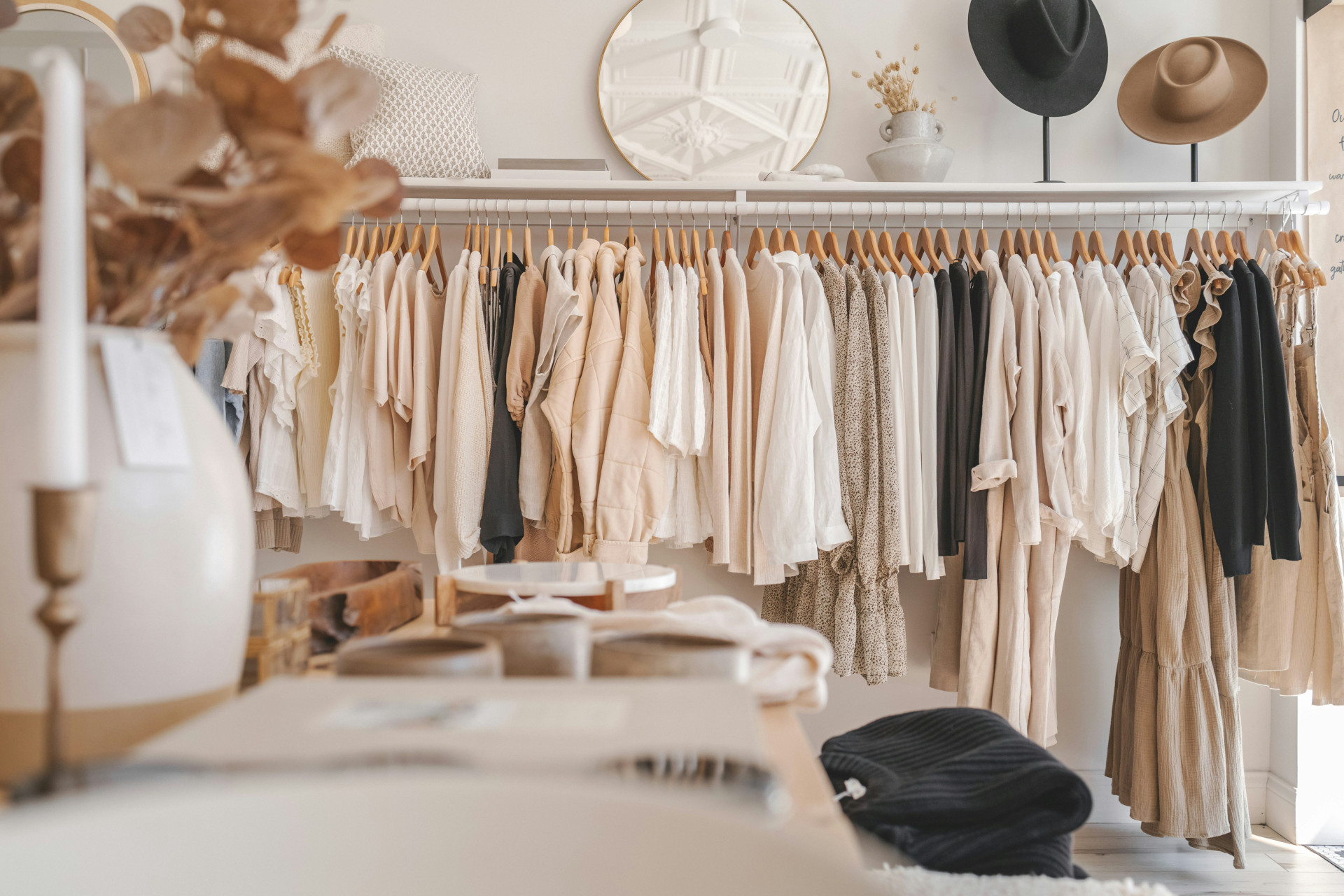
Just because it’s temporary doesn’t mean it has to look messy. A neat clothing rack, matching hangers, and a small plant or lamp can make a big difference. When your surroundings feel organised, it’s easier to stay motivated and keep things in order.
If your temporary wardrobe is in a visible area, such as the living room or hallway, use a curtain, folding screen, or bamboo partition to hide it. It keeps the space calm and visually tidy.
Læs også:



When the temporary becomes permanent
Many people find that their temporary wardrobe works so well that they keep parts of it even after the renovation. Open racks, modular shelves, and smart storage boxes can bring a sense of lightness and flexibility that traditional wardrobes sometimes lack.
Consider integrating some of these elements into your final design – perhaps as an open section for daily wear or as part of a walk-in corner.
A temporary wardrobe as an opportunity
Not having a fixed wardrobe might seem inconvenient, but it can also be a chance to rethink your habits and style. A temporary setup encourages you to prioritise, organise, and make the most of what you already own. And when your permanent wardrobe is finally ready, you’ll likely have a clearer overview – and a collection that truly fits your lifestyle.
Læs også: